
03Aug

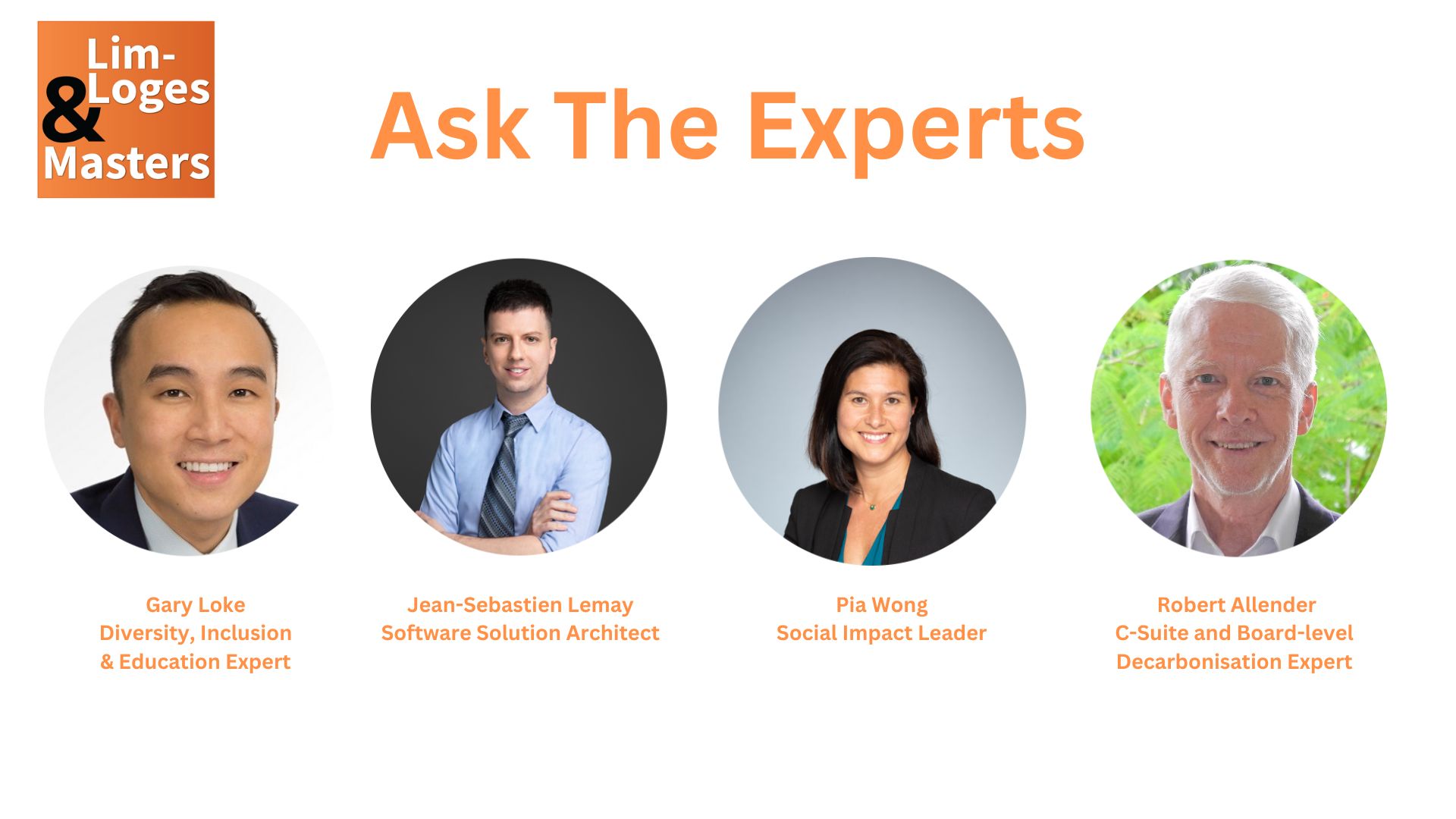
Mastering Scope 3 Emissions: Expert Insights for Effective Management with Robert Allender, C-Suite and Board-level Decarbonisation Expert

I have been involved with Scope 3 since it was born in 1998 – that’s when the greenhouse gas protocol came up with the definitions of Scope 1, Scope 2 and Scope 3.

What are Scope 1, Scope 2 and Scope 3 Emissions?

  • Scope 1 is the energy of the emissions from operations inside the companies’ four walls.
  • Scope 2 is the emissions mostly from purchased energy.

In fact, for those of us in this part of the world, where district cooling is not that uncommon, I could point out that when I first read about these scopes, the people who wrote the definitions hadn’t thought of district cooling; they only mentioned district heating, so I communicated with them and asked them to remedy that.

Scope 3 is the emissions from the two ends of the scale, which are the things that happen before something arrives in the company. The things that happen after something leaves a company’s doors. Most of us will spend our time concentrating on Scope 3, on supply chain emissions. However, plenty of companies are not very serious about their customers’ emissions, particularly companies that, for example, are selling automobiles or other energy-consuming things.

Where do Greenhouse gases come from?

I always remind everyone that we’re here for this thin blue line, our atmosphere. This tiny bit of distance between land and the darkness of space is what keeps us all alive. We’ve lived with Goldilocks climate for thousands of years. Still, as you’ll all know, we’re messing it up because we’re pouring enormous amounts of greenhouse gas, carbon dioxide and other greenhouse gases into the atmosphere.

I would also like to point out quickly that some of these greenhouse gases come from industrial processes and some from methane from waste. A fair bit comes from agriculture and land use – when you chop down a forest, you immediately reduce the amount of carbon oxide absorbed from the atmosphere, so equally, you’re adding to the amount that stays up there.

However, as you can see from this chart from the World Resources Institute, 73% of all greenhouse gas emissions come from energy use, and we need to understand that when we’re thinking about Scope 3, it’s about energy use. I think 11 or 12 of those 73% are from residential energy use and 61% or 62% are from business or organisational energy use. So, it’s very clear what the culprit is and what we need to tackle.

Scope 3 is nothing new

I would also like to point out that it’s not something new, although we’re getting very urgent about Scope 3. In 1856, a woman in upstate New York in the United States – not a scientist, I guess you can call her an amateur scientist – figured out that burning coal in large quantities would increase carbon dioxide in the atmosphere. She calculated that this was going to create some sort of global warming. She managed to find a university professor who partnered with her so she could publish a paper because she wasn’t a professional scientist.

So, we have a record from 1850, which tells us that we knew about these three years before the first commercial oil well was built in the United States, so she was certainly ahead of her time. I would also like to remind people that back in 1965, US President Lyndon Johnson was already telling people he wanted Congress to tackle the problem because he said carbon dioxide is what is altering the composition of the atmosphere.

These are the Scopes you’re well familiar with, and perhaps many of you will have seen this graph too, reminding us the orange line is the Scope 3 percentage that the World Resources Institute calculated for different industry types. The financial services sector has close to 100% of carbon emissions. Many other industries, which you think would be pretty energy-intensive, except for really energy-intensive things like making cement and steel, in metals and mining, for example, even the oil and gas industry, most of their emissions come from Scope 3.

Some mental models to help you understand Scope 3

So, it’s super important that we understand that this is a high priority. I also want to share some mental models I use to help people understand Scope 3. I usually give a long talk about these, so I will try to say them in two sentences – I’m not trying to teach you the basics of Scope 3 in this little session. Still, I want to give you the benefit of some thinking, which has helped people understand Scope 3 more clearly.

  • The first mental model that is very helpful is to think of Scope 3 as the progression of phases. Often, in a conversation about Scope 3, I find people jumping around different parts of these phases without even perhaps recognising that they are phases.
  • Having conversations about reporting, which are the material and Scope 3 emissions, and how they will deal with them, and having that kind of mixed understanding isn’t too helpful. So, I always encourage people to stop and break down their understanding of Scope through emissions into these 4 phases.
  • I also suggest that while Scope 1 and 2 have been quite well addressed by many corporations worldwide, Scope 3 is proving a challenge to virtually every corporation required to disclose their Scope 3 numbers.

I put it this way: I say, well, Scope 1 and Scope 2 could be dealt with like a project. I used this graphic – if a company decides to stop burning oil to produce heat and switch to electricity, it just requires a person in authority to say, “Take away the boiler, and we’re going to replace it with an electric heater”, and as long as the electricity is carbon-free, they’ve immediately addressed the entire Scope 1 problem. And Scope 2 can be addressed like that as well. If you need clean electricity, but your factory isn’t in the right place, then you probably better think about putting your next factory in a place where it’s readily available. Scope 3 is, by definition, not a project; it’s basically a new way of doing business. It’s an internal new way of doing business, so it’s not a project; it’s a process.

  • The third mental model that I encourage people to think about is who’s pushing for Scope 3 recognition, calculation and disclosure, and to understand the motivation of those parties or the influence of those parties. Do not simply assume that a stock exchange has told the company to do it and that the companies have told their suppliers to do it. We’re understanding the motivation of the party in much more depth.

Above all, scope 3 is being pushed by governments because they know they need to stop carbon emissions if they want the country or their city to survive in the next 50 years. Long-term investors are particularly interested in Scope 3 disclosure because they want their investments to be worth something 20 and 30 years from now. These days, many of us know that companies, customers, employees, the community, and peer pressure are also pushing Scope 3 forward. So, understanding the source of this motivation can be helpful.

Independent parties are writing some of the regulations and rules, and they also greatly influence how we deal with the Scope 3 parts. I mentioned these parties, such as stock exchanges, telling us what to do. Still, again, thinking through each of them, understanding their motivation, and writing down what their motivation is today and where you expect to be 3 years from now and five years from now are ways to make solid decisions about your Scope 3 work.

Q&A

What can you do with an uncooperative single-source supplier in providing Scope 3 data?

If you’re a company that must disclose your Scope 3 data, this is a challenge you must step up to. If you’re still not to the stage where you must inform them, it’s probably a good time to start a dialogue. But, if your first report needs to come out on December 31st 2024, which some Hong Kong companies have to do, or January 1st 2025, more accurately, then maybe it’s a little late to tackle it.

In my experience, there are single-source suppliers for certain things. If you’re building something or using some product that’s been mined and it’s, for example, quite rare or quite challenging to get hold of and use, or you’ve placed a 5-year order for this product. Suddenly, you discover this supplier is not cooperative in providing the data – various metrics are available in the public domain. Most of them are government-provided metrics. If you are trying to determine for, say, 200 tons of iron ore what the emissions were and producing 200 tons of iron ore in a certain type of mine in the Congo, for example, and the company there wasn’t providing you with the data you needed for your report, you could find comparable numbers on the Internet from government entities or academic entities. You could use those as a substitute.

As with most things in Scope 3, the best thing is to make sure that you’ve explained everything in your declarations about your data, which data you’ve used that came directly from a supplier. Let’s say a common factor for that particular product or that particular service for that matter. It can happen, and of course, even if they’ve given you the data, you’re still left with a question about whether you think it’s reliable. So, it’s a good idea to cross-check against those public databases to see whether the data that you’ve been given matches.

Scope 3 was born in 1998, so we’ve had plenty of time to build this data up now that it’s intensely scrutinised and demanded. Honesty makes things easier for everybody because everyone knows the realities, and no one can say they’ve never collected this data or why they should share it with you. Everyone knows they need it; even if some suppliers prove difficult, there are still ways around it.

There was another question on complianceHow do you ensure compliance from your business partners in your supply chain? Which goes towards that reply that I’ve just given – there’s no penalty at this point in time, but you could write them off your vendor list; you could, at some point, view their status on your supply chain.

For example, we can talk about Walmart because it was the first company that really strong-armed its suppliers. I think in 2007, Walmart gathered thousands of their top Tier 1 and Tier 2 suppliers into a giant arena in Beijing and got up in front of them and told them loudly and clearly that there would come a time when companies would get cut off the procurement list from Walmart if they didn’t satisfy their energy efficiency standards. They weren’t talking about carbon emissions, but of course, Walmart knew perfectly well that’s where they were coming from – energy efficiency or inefficiency.

I can’t say with the full knowledge about whether they used the term energy efficiency because people could grasp that better. Walmart was adamant, and I know that all my senior executives not only said the same to their suppliers but also had similar conversations with their employees. They said this is the way this company is going, and some of you will love it, and some will leave to find a job elsewhere. So, some companies have been pretty tough.

What developments have you observed regarding the use of life cycle assessment?

A life cycle assessment is a really interesting process. It’s been practiced for more than 30 years, which I know of, and it’s a way of analysing every part of and beyond Scope 3. It looks at the carbon emissions and everything down the supply chain from a total environmental perspective. The interesting thing that’s emerged recently is that because data accumulation is improving, life cycle assessment practitioners have been given a golden cup with data they would have previously struggled to estimate. They get accurate numbers, so conducting a lifecycle assessment before doing something, e.g., building a factory or starting a transport entity of any description or post facto, is now significantly more accurate than it would have been 20 or 30 years ago. We can credit the Scope 3 disclosure effort with much-improved accuracy.

Is it better to set ambitious Scope 3 reduction targets or to choose targets that will be easier to reach?

I give my clients credit when they ask themselves these questions as it means they’re thinking. They realise that there are two ends of the spectrum, and they will find where they want to be along that spectrum. Yes, there is a minimum ticking the box, and there is a maximum overstretching your ambitions. Saying that you’re going to be net zero by 2026, for example, but the brain work needed to go into finding that perfect position for your company is a positive thing for it to understand its situation and begin to set itself on a path to reach its numbers. I don’t have any problem with companies that set relatively easy-to-meet reduction targets; if they do it with the right intention now, they do it because they have a particular goal in some other area they don’t want to damage. We’ll invest in the companies that overextend themselves and are likely not to produce the results we want, as well as the companies who super underextend themselves, so again, I think that it’s a valid question to ask.

And I suppose that that’s one where board directors have to be critical because they will be held liable for it, and there are many reporting requirements. As of 1st Jan next year, Hong Kong companies have to start meeting those requirements.

Where do you advise SMEs to begin in the decarbonisation journey?

I advise them to begin with the first phase of the 4 phases I listed at the very beginning. I recommend that they spend a lot of time and effort understanding their emissions. This is now, in 2024, becoming more the norm – companies stop and spend some serious time and sometimes some serious money identifying their material emissions.

First, understand their Scope 3 emissions because if they’ve never done the analysis, why would they have that information at hand? It’s a brand-new idea, but I think it’s important to understand and prioritise before worrying about calculating and having a difficult conversation about disclosing. The most crucial step, which isn’t doing the reduction but spending the time and effort to understand at the beginning, will save a lot of tears. I’m sure many of us can think of companies that have been very enthusiastic or some salesperson who has sold the idea and began working on something and then found that it wasn’t the most important.

I’ll give you an example which I found super fascinating. In the United States, there’s a massive retailer called Costco. It’s a fascinating chain of stores that sells things in bulk, and people drive up in their big American cars and giant American shopping baskets, filling them up and going home to their big houses to store their stuff. You would have imagined that Costco’s biggest emissions were due to the giant shops and giant warehouses and the giant fleet of semi-trailers they have to ship products around the United States from warehouse to store. However, it turns out that Costco’s largest emissions, as a percentage, are because the Costco credit card is issued by Citibank, which has enormous investments and lends to the oil and gas industry. Due to that lending, it has a huge carbon footprint, and Citibank’s total emissions are more significant than all of Costco’s shops and the combined emissions from its trucking!

The analysis from the World Resources Institute identifies the percentage of total emissions from various industries from Scope 3. Even now, I hear a lot of experienced people saying Scope 3 is 60% or 70% of the total for most companies, but when you look at it, it’s way more than 60% or 70%. The top ones are:

  • Financial services
  • Capital goods
  • Transport
  • Original Equipment Manufacturers
  • Real Estate
  • Construction
  • Metals and mining
  • Agricultural commodities

In the case of Hong Kong, we’re a financial services centre; more than 50% of the Hong Kong economy is from financial services, so those companies are really on the line had to deal with their Scope 3 emissions – which come from the people they’re lending to just like the Citibank story.

Oil and gas processing businesses in Singapore account for 89% of Scope 3 emissions. So, when companies begin identifying and then deciding how to calculate and disclose their emissions, it’s a significant part of stopping climate change from worsening.

What role do innovation and technology play in reducing Scope 3 emissions? And can you provide examples of successful innovations?

Innovation and technology are two different things, and I want everybody who’s got any responsibility for dealing with Scope 3 – and sooner or later, that will be every single person on the payroll – I want them to think of innovation, not technology. I want them to think about innovation as the way they do things, the way they make decisions, the priorities they put on things, their expectations for financial returns, and working on investing in Scope 3 reductions.

People have been calculating for at least a decade that we already have all the technology we need to stop increasing the damage we’re doing to the climate. So, we don’t actually need any new technology. Yes, we’re human, and we’ll continue to develop new technology – and for many people, it’s fun to create new technology. But the fact is that it’s not what we’re depending on. We’re not waiting for some magical technology to come along to solve climate change and take care of our Scope 3 problems.

AI can help people analyse the data better and identify blockages quicker than they might have otherwise. We’re looking at things now from space that we never looked at from space before to help us identify methane leakage in the middle of Azerbaijan or inaccurate reporting of emissions from oil and gas plants. I know that in the northern United States, where they do a lot of fracking, again, that’s become quite controversial, and that information is now available due to technology. We shouldn’t stop thinking about innovation and keep it only to the topic of technology.

03Aug

“What Is Social Impact, and Why Is It Important to the People in Your Business?”

So, what is social impact? When you think of social impact, the easiest thing to think about is people. I can even call it people impact. So, whether you’re a large MNC, multinational, social enterprise or from the nonprofit world, social impact is the effect that your organisation has on the people it interacts with – both inside the business, i.e. your employees, your staff but also, very importantly, the impact that your product and services or any activities have on the community it operates in.

OK, it’s important to recognise that an organisation’s social impact is not limited. There are charitable initiatives and CSL programs, but it’s impossible to separate social impact from the people and community it operates.

What is the difference between CSR, corporate social responsibility and social impact?

So, I just want to clarify here because I get this asked a lot, primarily because of my background. I can tell you more about the background later, but it started in the CSR world when I worked in NPR and foreign nonprofits.

Corporate social responsibility refers to practices and policies undertaken by corporations to have a positive influence on society. This often extends to activities such as philanthropy, such as donating money to a food bank or other charitable causes. And, of course, community engagement, such as volunteering, reading to kids or distributing food packages to communities.

Social impacts are the effects of an organisation’s actions on society – both positive and negative. So, the intent is also different. CSR is a proactive approach from a company to being a good corporate citizen. In contrast, the purpose of social impact is the other side – the effects of the actions on the well-being of individuals.

What is the Scope of CSR and Social Impact?

So, regarding scope, CSR is a subset of social impact because it’s pure and only refers to corporate actions. The scope of social impact is much broader and can involve any organisation – corporate social enterprises and nonprofits. And I’d like to call social enterprises nonprofits and SDOs – service delivery organisations. This encompasses both nonprofits and social enterprises. Social impact is very much in that arena as well.

What is Social Impact Measurement?

I have a passion, and have focused in the last couple of years on social impact measurement. Again, there’s quite a difference between CSR, which focuses on reporting and compliance. In contrast, on the social impact side, it is much more concerned about measuring the outcomes of the impact and effectiveness in creating change.

So, social impact is everything from hiring practices and DEI to worker pay – paying your factory workers a living wage – to supply chain partnerships. For example: How does the dye you use in your company’s clothes affect the water? What are the health and well-being of the people in the local village where the factory is based? It is much broader and slightly different.

This is a very common mistake in social impact measurement. A study of over 1700 social indicators was examined, and only 8% evaluated the actual effects of the company’s practices on social impact. A significant majority of the indicators, 92%, measured the company’s efforts. This means things like staff volunteer time, donations, issuing policies or commitments, and conducting audits, which are more of the CSR mindset. Even serious activities like the number of books donated, trainings conducted, community programs, food distribution – all that stuff is on the left side and the effort, because we love to check effort, that’s the easy thing to check.

This is why I love this space: because it’s not easy, but when you get there, it’s worth it, and that’s the effects of the outcomes and the long-term impacts of the efforts. So that includes things like behavioural change, the number of jobs created, reduction in human rights violations, and diversity among senior leadership. How have those numbers changed over time? That’s what I want to be clear about.

What are the two key questions that social impact addresses?

  • Who is affected by your business?
  • How are they affected?

First, you need to understand who they are. You’ve got a lot of stakeholders; I’m not going to go through every single one you have; you know how important they are, and they all have different weights. I will mention the few most critical ones – employees- and this is really the core. This is where your company’s culture stems from. This is where you can drive social initiatives through their engagement and ideas.

Also, at the end of the day, socially conscious consumers seek brands that align with their values. This is a trend that is happening whether you like it or not. If you’re an SDO, your customers are your beneficiaries, so it’s critical to understand their needs – not what they were but what they are now and what they will be going forward because it’s constantly changing.

Potential investors are prioritising companies with strong social responsibility records. They’re going to choose a new company; this is critical. The other one I want to mention is because of my background in PR and marketing media. It’s important because media coverage can shape public perception and awareness of the company’s social impact efforts. They can break or make your company if one bad callout says you’ve been greenwashing or you’ve done something drastic. This will completely change your company’s perception and, maybe, future.

How Do We Improve Outcomes?
Once you understand your stakeholders and their specific points of view, you can have an explicit intention to improve the outcomes and terms they care about. This is important. How do we do this?

Why is it important? Well, the company is only as good as its people. I love this study; thanks to LLM for highlighting this because this is the one from their white paper from ‘Driving Business Success Through Sustainable Innovation – Perspectives and CEOs in Asia Pacific. (download it here- https://www.limlogesmasters.com/2024/01/29/driving-business-success-through-sustainable-innovation-in-asia-pacific/)

Lelia did not ask me to mention this at all, but I think it’s a great study. They refer to Deloitte’s global Gen Z and millennial survey that just came out last year where 22,000 people surveyed agencies and millennials from 44 countries, and what they found is:

  • 4 in 10 said they rejected work assignments due to ethical concerns
  • Over a third have turned down employers they feel aren’t doing enough on matters such as the environment, DEI or mental health
  • Less than 1/2 believe the impact on business and society is generally positive

Later, I will share some examples of how specific companies in Asia, in Hong Kong and around APEC, have successfully responded to this demand.

Now, we will go to the how. Alright, this essentially addresses another question that came up, which was:

There’s an emergence of a demand for service programs that connect multiple stakeholders in the community – their community service program where volunteering days are arranged by a social enterprise, connecting a corporation with a social enterprise and its beneficiaries. What do you look for when choosing one social enterprise or nonprofit over another, even if they have similar demographics?

Ultimately, it’s about building effective partnerships. You need to know who they are and make sure you form a strategy together so you have your own KPIs – the social enterprise, nonprofit, and corporate. So, for successful partnerships, you need to understand your goals as a company and business before choosing nonprofits to work with.

For example, MTR in Hong Kong does excellent work here in terms of social impact. They collaborate with several NGOs; they integrate individuals with diverse abilities and backgrounds into the workforce. They have maybe ten people with physical and mental disabilities, and this aligns with their business needs in a competitive talent market. They believe that NGOs can help them reach those goals. The NGOs train them, identify the best candidates for them to help, and then do internships and provide programs to test them out. It’s been a huge success, and they’re hiring them full-time.

The Importance of Purpose
So, I think this is one area. Purpose is an impact they need to recognise. Also, the SDO can really help them fulfil those goals. To do this, you must understand the social enterprise or the nonprofit’s objectives, which means building trust. It’s common for funders and NGO’s not to fully disclose information during discussions. Their budgets may not necessarily include all the expenses, and the funders get sceptical. NGOs withhold details because they’re concerned that if they’re too transparent, it will jeopardise their funding. Maybe they don’t understand that we need money for capacity building because they always want to ensure that every dollar goes to the end beneficiary. For sustainability and tangible impact, you need to invest in capacity building; it’s just critical.

At the end of the day, it’s just asking fundamental questions. For the corporates and the funders’ point of view, you need to ask:

“What is that purpose?”
“What are our social environmental goals?”

We live in a new era where consumers, businesses, investors, employees and service providers attach real economic value to social outcomes. For the first time, nonprofits have economic power. It’s an era where feel-good issues like education, the environment, healthcare, the arts, and animal rights have direct economic consequences and opportunities.

As part of the due diligence process, going back to the original question, funders can ask questions such as:

  • Is the SDO a learning organisation?
  • Can they show they’ve learned from their mistakes?
  • Are they open?
  • Are they transparent when they do make mistakes?
  • From a governance standpoint, for example, does management listen to the people working on the ground?
  • Do the board of directors really relate to what’s actually going on?

And this is such an important question:

How can we help?

Ask any NGO where they need help and see if you can support them in that area. Listen to their needs instead of “we know everything, and we’re going to help you” – it has to go both ways.

From the nonprofit and social enterprise side, nonprofits now have leverage, but they have to learn how to measure and sell their impacts to a new set of stakeholders. Are they being fully transparent and asking themselves if they are looking at their own staff, measuring their impact effectively? I think these critical questions are important to bear in mind.

Defining and Achieving Social Impact Goals
Finally, there’s not one thing in social impact that’s done, and then you can tick the box; it is a constant thing. Wherever you are on the journey, and this is where we can come in and help. You’ll need to find out your current state – it’s like a health check, like if you’re going to the doctor. You’ve got to know what medicine you need, how to improve, or where you are.

The best part is acknowledging that you know about societal and environmental issues. That could be a materiality assessment for a company or an impact evaluation for an NGO or social enterprise to see where you are. Once you’ve done that, you need to define what success would look like. There are multiple pathways to get there and many steps to reach the desired goals, and you have competing demands, priorities and socioeconomic factors that can pull your business or SDO in all different directions. This is where it’s important to have a north star, a purpose of vision; otherwise, you’re going to be blowing in the wind, which can be very frustrating for everybody in the business.

Social Impact Tools and Frameworks
In terms of the actual action plan and road map, there are many different tools and frameworks that can be used. I’m mentioning a few here, like the logic model and theory of change. Some of these you may not have heard of but are very common in the SDO world.

The impact assessment, which is EIA, is a free online tool that companies can use as a health check and where they go if this is part of the B Corp certification process. It’s a fantastic tool that looks at five different stakeholder areas. I could do a whole separate session on that.

Then, I’m sure you’ve heard of the triple bottom line, which is a comprehensive approach for businesses to assess the impact on people, planet and profit. So, they need to balance these three areas. So, those are some of the frameworks that we use.

Examples of Brand Social Impact
I mentioned I wanted to highlight some brands, specifically Vitasoy, a Hong Kong brand, but I believe it is in Singapore; they’ve got the B-Corp certification because they are genuinely and authentically pushing sustainability and the social and environmental sustainability agenda, which is fantastic.

L’Occitane is another one I wanted to mention just because it’s a cosmetic brand, but the APAC office coming out of Hong Kong led the B impact assessment journey. To get the certification, and yes, it came from the top down from their CEO in France, it meant in Hong Kong and APAC, the legal, HR, CSR, marketing, supply chain, human rights, and responsible sourcing team – everyone was involved. That meant it rallied them all together for a greater purpose, and it wasn’t just one CSR department doing all the work. They had the outcome they wanted. For example, one of them was SD 12, which was sustainable consumption and production, and they would reduce waste generation. One of their goals is to collect, for example, 2 million from beauty empties – the beauty products’ containers – and they collected 100 of them, then created some artwork, and re-used them in other areas. They have also done volunteer opportunities throughout this, so there are many ways this can be achieved on a practical level.

Another great brand is Lego. Not because they’re doing great work but actually because they’re being very honest and authentic. I get suspicious of any impact or sustainability report with too many fancy graphics – they spend too much time on how it looks, but there’s not much substance to it. It takes years to build a brand, but it just takes one event for the trust to be eroded. Lego admitted recently that it abandoned plans to produce its bricks from 100% recycled plastic after a project stated that this transition would increase its carbon footprint. And this is after two years of research and expanding its sustainability department to 150 staff. They tested hundreds of materials and did life cycle assessments to scale the production but then realised that their carbon footprint would be higher if they did that. Now, they’re focused on reusing, which is better than recycling. So, just be very open and transparent. Even if you’re wrong, to say you’re wrong is fine. We’re all learning; we’re all on this journey together.

Q&A

What does SDO stand for?
Service Delivery Organisation. This includes social enterprises, nonprofits, and NGOs. Nonprofits and NGO’s are used interchangeably depending on where you are.

How can investing in social impact become a strategic advantage in today’s competitive business landscape?
It creates a purpose for the employees; it gets them rallied towards the North Star. Define your goals, whether it’s getting a start towards volunteering or having specific metrics that you can use. At L’Occitane, for example, rallying all the different departments and competing to achieve their goals was the best way to build teamwork across departments. Being competitive, they were all trying to outdo each other, so that’s great. To bring in Gen Z and millennials, you must have this at the forefront. Now, it’s not just a department that has to be embedded across the whole company the next

How is an organisation’s culture affected by social impact initiatives? We’d love to hear your examples.
When I was running ‘Bring Me a Book’, for example, one of the areas that we needed to improve on was our website. We had a bilingual search engine for children’s books and met a tech company that helps with website design. They had about 20 programmers, coders, and designers, but they had a bad company culture. My friend was working there, and we needed to change the culture and do something.

It was a fun, fantastic project because we brought children’s books from India, Turkey and worldwide and put them into a bilingual search engine. They got to work and did an amazing job, which is now in the Hong Kong Public Library. It purchases all the recommended books in Chinese and English, but this would not have happened without this company, which was able to use its employees globally to work towards this.

You know there are many. MTR was a good one in terms of DEI and trying to fulfil their requirements with the environment, as well as another example of L’Occitane. There are lots of different models. Look at Patagonia, one of the most famous, but their corporation is not doing it just to be cool. You can have it in your company articles to say that even after the CEO leaves, we’re still doing our best for society and the community in which we operate.

What does social impact mean for real estate companies?
This is important because when you have tenants in the building, walkways and areas, fountains outside the building, or art exhibitions that provide for the community – all of this affects the community you work in. Hotels, for example, come to us to see how they can support the local communities they’re working in, and I think the mindset is shifting. I would recommend they look at the impact assessment as a guide to see where they are because it gives you lots of ideas of where you can improve not just in the social community, workers and suppliers, but also on the environment side as well.

There’s no quick fix, I’m afraid. It takes time, needs to be built internally, and is all about being authentic – that’s just the starting point. Admit that you’re not there yet. You must be humble in this space; it’s a different mindset.

What inspired you to transition from PR and marketing to social impact, and how do you think your early experience influenced your work today?
Thank you. It was when I came back to Hong Kong in 2006 after working for big PR marketing agencies. I wanted to use that skill to sell not just on a product – another handbag or something – but for something good for society. That’s when I met the founder of Bring Me a Book and got into the space. Leading that organisation for 12 years, I saw a lot of CSR and greenwashing. Corporates who came to us and asked for some ridiculous things that were unhelpful and not needed in the literacy world of Hong Kong were just trying to tick the box on their side. That’s when I realised that I needed to understand outcomes better and impact and measurement.

Also, how do we change the mindset, not just at the corporate level but on the nonprofit side, to be more professional about how they approach their work? I feel like that transition was a natural progression, but it did take some time and a lot of upskilling and learning a lot of frameworks. I tried lots of different frameworks to see what suited me. Ultimately, as much as I like people, I don’t feel every organisation needs a tailor-made framework.

How does a small social enterprise approach a corporation?
You might be small, but you can be mighty! I can tell you that some of these corporations are looking for grassroots organisations. It depends on which industry and what specific calls you are focusing on because, obviously, with corporations, they have their remit. Some focus on the elderly, some focus on animals, and some focus on human rights – all in different areas.

If you find your match, and this is where I can come in. You need to do some due diligence yourself to find those corporations that focus on the elderly or poverty or food redistribution. Perhaps it’s a partnership with other food redistribution NGOs, for example. The fact that you’re a social enterprise and NGO could work in your favour, but it can also be difficult depending on the organisation’s remit.

Transcribed from Lim-Loges & Masters’ recent ‘Ask the Experts’ session with Pia Wong.

03Aug

“Can AI Replace Everyone?” with Jean-Sebastien Lemay, Software/AI Solutions Architect

What is a Software Solutions Architect?

My name is John Sebastian Lemay. I’m a software solution architect, and I’ve been doing this for 15 years. My role is to help you make more money through technology, specifically by building systems and the process to get that done. It involves understanding first – and that means we take your knowledge of your industry, business, and clients. We mix that with our understanding of technology, what’s available, and what’s feasible. We combine these two things to build a system that will take you where you need to be. Many of the systems I’ve been building recently involve AI integration with artificial intelligence, so we will be tackling that topic today.

So, I think the first step to getting started, which is important, is understanding what AI is because I believe there’s a lot of marketing out there and some claims are slightly misleading.

How Does AI Actually Work?

Everybody’s talking about ChatGPT. Let’s have a crash course on how AI works.

So, ChatGPT was born out of a process we have been using for a long time, called machine learning. Machine learning is taking data, giving it to a computer, and using an algorithm to teach the computer to recognise patterns in that data. So, that’s what we call training a model.

An example would be taking pictures and using a machine learning algorithm to get the computer to look at these pictures and distinguish the patterns that make a picture/photo of a person versus a picture/photo of something else. As you train this model, it starts remembering and recognising these patterns to a point where later you can show it a picture it’s never seen before. Because of those patterns it has learned in its artificial brain, it can tell you if it’s a photo of a person or not.

Now, these teaching algorithms and learning governments have evolved, and they’ve been able to apply them to natural language instead of pictures or other types of data. So, in the case of language models like ChatGPT, they were able to teach the computers to understand the patterns of natural language and the relationships between words and whatnot, and, at first, they were able to get these language models to complete sentences. They would give it the beginning of a sentence and they would be able to figure out what is likely to be the end of that sentence. Then, they just kept fine-tuning that to a point where we can publish a question to a language model, and it will be able to produce a human-like answer.

That’s what language models are based on – their knowledge of language patterns. They’re able to digest language natural language and produce natural language answers, which is amazing that we can do that now – but I do want to add a caveat about this, which is that these language models this is all that they do; it’s a machine that takes text and produces text. It’s true of all AI; these models take an input and can create an output now. What they do is impressive, but it is all they do, and we’ll get back to that later in the presentation; it’s just to take note of now.

Why is this revolutionary? Why is this amazing? Well, it turns out that for the longest time, computers were very strict about the kind of data they were willing to work with. I’ll give you a simple example. If you’re working with Microsoft Excel, you must work with an Excel file; there’s no other way. If you’re using software or a system needing your information, you must fill out a structured form. You will have to fill in different fields, and if you want to trigger an action, you must click a button. Everything was super specific and strict, and now that we have these language models, we can deal with natural language, which is a lot more flexible. This opens the door to many incredible things, like the ability to apply data processing to natural language. Still, it also opens the door to new ways for users to interact with systems, opening many opportunities.

How Have Companies Leveraged AI?

We will look at how some companies have largely leveraged this new capability.

For example, there’s a startup here in Hong Kong that I’m involved with called Lobahn Connect, and their mission is to connect professionals who want to build their careers with employers who are seeking good talent for their job listings. We have an algorithm that computes the compatibility between candidates and employers. This algorithm needs a lot of data to calculate a good, reliable score. What happens is we need to collect all that information from the users, so they must fill out forms. However, now that we have language models, when these people give us their CVs or get a job description, we can ask the language model to extract a lot of information from those, regardless of how it is structured. Because it’s natural language, it means suddenly, we can shave off 60% of the time it takes to onboard these users because we can extract information from these documents. We couldn’t do that before.

Another example would be Impala, a company here in Hong Kong that produces technical documentation instruction manuals. They would get products from manufacturers with accompanying reference materials, and the technical writers would have to look at all these materials to figure out what to write in the instruction manuals. Because we have language models, we can predigest all these materials from the manufacturer and prepare a draft of the instruction manual and all the information mined from these reference materials. This accelerates the work of these technical writers who just now have to revise and fill in the gaps – shaving off 80% of the time it takes to produce a user’s guide.

Lalamove, a delivery services company, have an app where users can publish written reviews about their services. For the longest time, they had to rely on staff to look at these reviews to figure out what people were happy or unhappy with. Now that we have language models, we can automate that process because the models can digest these written reviews and extract information such as what people are happy and not happy about. In this case, we’re talking about full automation of the process of making these reports based on user reviews. So, we’re talking about shaving off 95% of the time it takes to compile that data and saving costs, too.

Don’t Just Get AI And Fire All Your Employees!

AI can do amazing things, and that’s very exciting, but also, if you think this is so good, I’m just going to pay for an AI license, fire half my staff, and everything will go great – that’s not going to happen! Let me tell you what’s going to happen if you do that….

An article from Forbes in July of this year reveals that 77% of employees have reported that AI has increased workloads and hampered productivity.

So, what happened? The truth is these companies just took AI and released it in their business and said go. They didn’t know what you know today: AI alone doesn’t do much. What it does is impressive, but it doesn’t do much besides taking an input and producing an output. So, they lost out, and to understand and leverage AI, you must see AI and perceive it as a component of a bigger system. And that bigger system comprises traditional IT components assembled like we were building systems before AI became popular.

It needs to be able to connect to a database, have a UI in front, and integrate with the systems you’re already using – that is the key to success! If you want to see the gains we’ve discussed, you need to see AI as a tool that becomes integrated as part of a greater system. Knowing this lets you tackle the big question of who’s getting replaced. Are we all getting replaced now?

Will AI Replace Us?

AI, by virtue of being a new technology, will replace some people the same way that ATMs have replaced a number of bank tellers. But now that you’re also aware of the limitations and the amount of work involved in making AI work, being part of a bigger system and whatnot, it’s not going to replace everyone.

What draws the line between what it’s going to replace and what it can’t is context because, as intelligent as these language models seem, they can’t read your mind. To produce good answers, they need to know as much as possible about what they’re supposed to do. This means you need to give them many instructions to produce good answers.

Imagine you’re a manager or an executive – every decision you make involves many factors. You’ve got years of experience, you’ve got lessons learned, you know your customers. If I put you in front of a chat box and told you to write your whole life story, write everything you’ve ever learned and consider this when you make decisions, that would not be possible. In truth, AI is better suited for tasks that don’t require too much context to complete.

For example, simple data entry just asks that you have an input document and do something with it. There’s not too much context involved. But as soon as you’re writing emails or making big decisions, the context becomes too big to fit into what you can tell the AI. That’s basically what prevents AI from really taking over and replacing everyone.

Should We Be Fearful of AI?

So, those of you who joined it with fears, I hope they have been assuaged a little. AI is a tool that can assist you in your tasks. In the same way today, it would be difficult to find an office job if you don’t know how to use Microsoft Word, Excel, or even PowerPoint. I think in the world of tomorrow, if you don’t know how to leverage these tools, they might not replace you, but you might get replaced by somebody who does know how to make the best use of them. That’s the key takeaway here, and so I hope that gave you a good overview of what AI is, how ChatGPT was born, and what it can and can’t do.

Q&A

How do we prepare the current and future workforce for AI, and how would it impact the way we work today?

So, I think this question has come up in several forms, and it is very similar to how we get started as a company or as a small establishment. My advice would be to start with some straightforward productivity gains – the tasks that people in most companies do regularly. Let’s say, for example, you adopt an AI language model like Microsoft Copilot, which has the advantage of being already integrated with many programs. You’re going to be using Outlook for emails and Microsoft for writing documents and using it to assist you in writing better emails or summarising your meeting notes. Or if you have an IT department, it can help them produce some code faster; it can also act as a search engine if you’ve got knowledge base documents; it can store policies and procedures instead of requiring people to look through all the pages. You can plug into the AI and instead have users ask the AI questions to get the answers, but even in those cases, it’s essential to know that there’s a process to this.

For example, you need to begin with a data permissions audit, where you must ensure that AI accesses only provide information the person asking for it is entitled to. So, that needs to take place, and there will be some training to ensure people know how to best use this language model. On top of that, part of the process is that you elect some of your staff to become champions in this process and internal influencers who will become go-to resources for the other people in your departments to get assistance with AI. These people will be empowered to learn as much as possible and figure out how to best integrate the specific workflows at your business. As you’re doing that, you’ll encounter some situations where you can look at your business processes. Think about exciting new ways for users to interact with your business. Or are you involved with processes to deal with natural language processes that take time, processes that cost a lot of money?

Once you start looking into those processes, you can think about further integration of AI. Phase two is to start seeing the same gains we’ve discussed in our earlier examples. These examples all had in common that AI was embedded into significant business processes, and a system was built around AI to accelerate these processes. In the early stages, I would suggest just getting started with productivity enhancements, which would be my answer.

Can you ask AI to aggregate the questions that you received?

Absolutely! This would be a task for which language models are especially suited for combining and summarising things.

Are specific skills required to use AI properly, and how do we train tomorrow’s workforce, whether students or people currently employed?

The first step is education. I think just what you’ve learned today about what AI is, what these models do, and the limitations of those models is a great first step because once you know what it is and how it works, you know that all the marketing is not going to get to you – you’re going to have a realistic portrayal in your mind of what you can achieve with it. Regarding language models, it might feel like you’re talking to a person because of how it responds – it responds with natural language. You’re still talking to a computer, and computers like to be talked to in a certain way. I know that because I’m a programmer and have been doing that since before I became mainstream.

Computers are very capricious while you talk to them, and the same applies to language models. There’s a way in which you can structure your questions, structure your ‘prompts’, as they call them, to get the best possible response from language models. The art of structuring your prompts so that you can extract the best value out of these language models is called prompt engineering, and it makes a big difference in what you can get out of those models. Luckily, it’s a skill that anybody can learn, it’s a skill that can be taught, and it’s a skill that applies to the different models that exist out there, whether it’s Copilot ChatGPT or Claude or any of these you’ve heard about. It’s a bit of a universal skill.

So, what my response would be, especially when it comes to students or people who want to update their skill set:

  1. Being aware of the capabilities and limitations of AI is a great step forward
  2. Being aware that prompt engineering is a practice, you can learn to get the most value from many language models, and of course, we can help you with that.

How can SMEs cost-effectively adopt AI should they approach large software vendors to assist with the process?

When it comes to SMEs, it depends on what kind of SME we’re talking about. If budget is a concern, I would not advise automatically going for large software vendors just because of the upfront costs you will have to bear. The truth is, you’re probably better off to invest in an expert. The good news is, when it comes to language models, there are some free ones available that you can use that are very powerful. I use them regularly, and I’m happy with them. There are free language models that you can deploy, but you’ll need to run them yourself, which is why you need a tech expert. You can use these models for free to get started, so you’ll only pay for the expert to put everything together at the end of the day. That would be the cheapest way to get started.

That said, some commercial models, such as Copilot, are not expensive. For anybody using Windows right now – it’s built-in, and you can use it for free. So, if you wanted to dip your toes in, you could leverage that. They also have the Copilot website, which you can access on Mac or another operating system. You can use These three models, and I believe they are powerful. You can get a lot of value out of those, so I would advise a startup to focus on that at the beginning, and instead of going for some big software vendor solution, maybe invest in an expert who’s just going to set that up for you.

How does AI transform the HR function – would that have significant negative impacts?

There are challenges, but I would say first, from a hiring perspective, knowing perhaps that your company wants to become powered by AI or implement AI. I’ve just talked about prompt engineering; it’s a skill that you might start looking for in some of the IT personnel you hire to make sure that they can make the most out of the tools you’re going to make available to them. But when it comes to dealing with the hiring process, that’s a bit more nebulous because the biggest challenge you have right now is that people can use AI to write their cover letters and things like that. People have been gaming their resumes for ages, and now, unfortunately, they can do it a little bit more efficiently. Still, it also opens new doors for you because you can use language models to extract information from those resumes in a way that is much more efficient than the systems that relied on older technology. So, there’s a bit of a gain and a bit of a loss. I think the balance is going to be in the middle

How will the limitations in China affect the development of AI in the Chinese market?

Language models are developed in China, and I don’t see any sign of them slowing down. The algorithms to train these models are out there, and anybody can use them. They’ve been using them to build models, especially good at dealing with the Chinese language, which is no easy task. Some, which I mentioned, are free and available to the public, including some of the models developed by China. I don’t see any sign of that slowing down. We can also consider that to train these models, we need a lot of data, and you can be certain that China has a very large pool of data from which they can pull and teach these models. So, I don’t think there will be any slowing down on the Chinese side for these language models.

What’s an AI agent, and what does it do?

You remember, at the beginning of the presentation, I mentioned that language models or AI models, in general, don’t do much. They take an input and produce an output. In the case of language models, its text, but on the same occasion, you’re hearing stories of people saying that they’ve got an AI agent booking flights for them or making restaurant reservations. So, how can the two of these things be true at the same time if AI doesn’t do much?

The answer is that these AI agents leverage AI as a component, but other components surround it. In this case, the system contains pre-programmed actions that it can take, like making a reservation or booking a flight. The AI component is just a translation layer where somebody says I want to make a reservation and book a flight. The language model digests that request and chooses which pre-programmed functions the system should execute. The system will observe the language model’s response and trigger these actions. This is how agents are built – it’s very powerful and exciting. But as I mentioned, it’s not just by itself; it requires some work. It requires a complete system to be built around it.

There are exciting opportunities; you must be careful and put in safeguards. You don’t want to be like the car dealership in the news recently, where they deployed a chatbot with no safeguards, and it started offering deals on cars for $1.00! People were using prompt engineering to manipulate the language model into making these deals, so just be careful about how you approach this.

Examples of free experts: The biggest and best free model that comes to my mind is called Llama 3. It’s been built by Meta, the company behind Facebook. They’ve been releasing this model called Llama for free for quite some time; I’ve been using it personally, and it’s excellent for getting started. The fact that it’s free is fantastic, so if somebody wanted to play around with the free models, you’d need some technical expertise to set things up, but then you have a free model you can run.

Can you provide some examples of how AI is currently being used in real-world applications to improve efficiency or decision-making in supply chain operations?

So, in this case, it’s not a question about language because language models focus on the area of natural language. When we’re talking about optimising the supply chain, for example, we’re going back to the parent of language models – which is machine learning.

Machine learning is the process of teaching a computer to recognise patterns in data. If you have a supply chain and you’re collecting data about that supply chain – data about the vendors, the deals, prices and logistics – you could feed that to a traditional machine learning model, not a language model. It derives insights from that data that would take a human way too long to figure out – the computer can do it much faster.

There are three main things that machine learning can do for you. The first is called ‘clustering’, which recognises groups within the data. For example, having information about your customers would help you identify the different segments within your customer population.

The second thing you can do is ‘classification’. For example, it’s the art of categorising data. If you have a lot of transaction data and know that some are fraudulent, you can give examples of good and fraudulent transactions through a machine-learning model. Eventually, based on the patterns it has learned, it would be able to flag future transactions and determine whether they might be fraudulent because these patterns have been recognised. The last one would be regression, which is the ability of an AI model to predict numbers based on numbers it has seen before; therefore, sales forecasts based on past data. Machine learning can help with these three things. That’s not something for language models but for machine learning.

03Aug

“Enhancing Workplace Inclusion: Addressing Microaggressions and Promoting Diversity” with Gary Loke, Diversity, Inclusion and Education Consultant.

Thank you, Lim-Loges & Master, for organising this session today and thank you all for attending the session and taking the time.

When Lelia asked me to talk, she said pick a topic you know you’re passionate about. I thought about how we can create workplaces where staff can feel psychologically safe. I want to address a specific topic today about microaggressions and how dealing with them can generate safer workspaces or create psychologically safe workspaces for staff in your firms.

What Are Microagressions?

So let me start by saying, ‘microaggressions are death by 1000 cuts’. I love this quotation. This is how micro microaggressions are described in a 2021 article in Scientific American. The term was first coined in 1970 by a US Harvard University psychiatrist, Chester M. Pierce, to describe the insults and actions he saw or witnessed against black Americans by non-black Americans.

In the article, the psychologist Derald Wing Sue, an Asian American and an eminent professor in this area, calls these everyday slights, insults and offensive behaviour that people and marginalised groups experience in their daily interactions. He states that studies have shown these can cause actual psychological harm and happen in their day-to-day lives, not just at work but in day-to-day interactions.

Microaggressions in the Workplace

Today, I’m going to be focusing here on the work environment. In the workplace, these can often be unintentional, but they can cause hurt, whether intentional or not. They come from our stereotypes, and that’s another topic I can discuss another time. However, these stereotypes and biases form, and they’re also impacted by societal and cultural norms. The ‘norms’ are in inverted commas here because that’s how culture forms and is an interesting part of workplace culture.

So, what do I mean by that? Stereotypes, for example, when people say, “You know X group are more hard-working”, or “X group are lazier”, or “X group are more educated and more cultured”, – all lead to our biases. We might say, “Oh, we will recruit more of X because they work harder”, and so on, and our societal and cultural norms influence these stereotypes.

I will explain more about this as I go along in my presentation. So, what are some of the microaggressions that people at work may face?

Examples of Microaggressions in the Workplace

“I’m glad you’re so different from them, you are not typically x you’re…”

I took this from an article on microaggressions faced by Filipino professionals in Singapore. In fact, in the article, Filipino professional staff talked about their experiences of being told by their managers that they were not typically as loud as the Pinoy workers or other Filipinos as if there was high praise for being different from their own ethnic group from their culture. But it was actually an unconscious stick at the culture regarding what is perceived as the norm of Filipino behaviour. In that same article, others talked about how they were told their English was very good for a Filipino. A similarly backhanded compliment because you come from a particular cultural place, you have a different level of education, and therefore, your English is not as good.

I mentioned in my previous slides that microaggressions are often unintentional, and sometimes, the people who say these things think they’re doing a good thing and compliment them.

For example, “Oh, you’re so inspiring overcoming your disability.”

To a disabled person, this reinforces harmful stereotypes and diminishes their work experience. You wouldn’t say to a non-disabled person that they are an inspiration just for going to work and performing their job. So, what makes it so different for a disabled person? It reinforces that framing that we value able-bodied people as normal and disabled people are outside of this.

I know someone who said it better than I did. I will show you a quote from activist and comedian Stella Young:

“I want to live in a world where we don’t have such low expectations of disabled people that we are congratulated for getting out of bed and remembering our own names in the morning.”

She always faces this experience; she gets congratulated just for being. Yes, there are inspiring disabled people just as there are inspiring women, inspiring men, inspiring leaders, etc., but not everybody is inspiring; otherwise, the term inspiration would be meaningless and can manifest itself in behaviours.

Understanding the Impact of Cultural Norms and Microaggressions

Microaggressions, as I mentioned earlier, come from the stereotype of what we believe as cultural norms. For example, in almost every culture, we have gender expectations of how women and men are supposed to behave and when people don’t fall within those norms, they are often subjected to microaggressions.

In the West, for example, there is the stereotype of the angry black woman. This pervasive stereotype is characterised as black women being more hostile, aggressive and overbearing, but if they’re made to feel that on a daily basis, they may alter their behaviours and not be authentic at work. This may hold them back from realising their full potential in the workplace and sharing ideas.

Similarly, in many cultures, one often hears that assertive women are described as bossy. If you’ve worked in Asia, you could be the ‘bossy lady boss’ – one of the descriptions sometimes used – whereas assertive men are called good leaders; they’re in control of things and can manage their teams. Here, we’re placing gendered stereotypes and gendered microaggressions against women.

Other Examples of Microaggressions
Shortening Your Name

Other common examples are being asked to shorten your name if it’s unpronounceable. I’ve worked with colleagues from southern India who have been told they need to shorten their name in the office because other colleagues say they can’t pronounce it. The manager told them to make their name easier to pronounce. This kind of invalidates someone’s experience and their heritage.

Asked Your Opinion More Than Others

There are occasions where people from certain ethnic groups or genders are asked their opinion more often or their views are seen as more valid, so in office meetings, for example, you may see people from dominant ethnic cultures or men being called on more often to speak with their opinion seen as more valid, often they’re given more airtime by the person who chairs the meeting. This is where the subtle forms of microaggressions come in.

Assuming You’re a Minority

Another typical example is assuming that a woman from a minority is born a ‘junior’. A very senior Indian professor said to me, “I am a small Asian woman in the UK, and I’m always mistaken for the tea lady. Whenever I go to a meeting, people ask me to make tea even though I’m the professor in the room!”

These kinds of comments chip away at your confidence, and these microaggressions are more likely to be shown towards people like women, people from minority groups or races, LGBTQ plus people and disabled people. That’s the dynamics of how microaggressions work and why it is important.

The Impact of Microaggression

The impact of these things that happen, often daily, cause many people at work to question whether to let it go or confront the person and potentially jeopardise the relationship with that person.

In some cases, the person who experiences the microaggressions may experience it from their superiors, and they may choose to let it go, fearing it will jeopardise their career, so they don’t mention it. However, 1000 cuts, as I mentioned earlier, can erode confidence, make people stressed, and make them feel that they don’t belong in that work environment. It can affect staff retention as people leave because they think this is not the environment for them.

It may conversely be what makes people work harder but not more productively – they may work harder to burn out because they’re trying to prove the point. For example, suppose you’re told that you belong to an ethnic group constantly, and this stereotype is being lazy. In that case, you may work a lot harder but not more productively, so it’s not great for productivity and team dynamics.

The importance of Psychological Safety

The reduced impact can affect staff attention, well-being, team dynamics, how teams’ function and productivity. Why? Because psychological safety is such a big part of work today.

Psychological safety is a term coined by Harvard Business School professor Amy Edmondson in 1999, and it means feeling safe to take interpersonal risks, speak up, disagree openly, surface your concerns without fear or negative repercussions, and make workplace mistakes. Being psychologically safe among your team members means expressing yourself openly by asking questions, sharing ideas, admitting mistakes or offering feedback without fear of punishment. This leads to increased collaboration, innovation and overall team performance.

Older studies show that with psychological safety, people are encouraged to share creative ideas. In this environment, people feel safe to think about and share new ideas, leading to innovation. The research shows that better psychological safety at work equals better productivity and more effective teams, and that’s what we should strive for in the workplace.

What Can You do to Manage Psychological Safety?

So, I want to move on to practical things. What can you do today? I’ve talked briefly about microaggressions and psychological safety, but what can you take away from today?

I will start with the personal because I think that’s the first place one should always start. Firstly, I would say notice what is happening around you and think about your own behaviours in work situations. Are you unintentionally giving compliments without realising it? Do stereotypes influence your views of certain people at work? What are the team dynamics in your workplace – are certain people being called on more often to do certain things because of stereotypes?

  • Notice what’s going on around you and think about what it might mean, what’s impacting it and what you might change if the issues of microaggressions are raised.
    Or, if you are challenged, don’t be defensive. The first thing for many people is, “I didn’t mean it that way” It’s easy to brush it away or be told, “Don’t be so sensitive”. It goes back to the point of intent here, whether intentional or not.
  • Acknowledge and accept that hurt has been caused, think about the open discussion and learning, continue to listen and learn and be more welcoming of the feedback.

Psychological Safety in the Workplace

Here we are talking about offices and the work environment, so we need to think about what you know your workplace can do to address microaggressions. In the large picture of psychological safety, it’s not just about personal learning; it’s about organisational culture as well as some of the interventions.

What is the culture like in your firm – does it allow staff to express their opinions to understand if microaggressions are impacting them?

Is there a culture of openness and strong psychological safety at work?

I always recommend an audit because one size doesn’t fit all. Every company has its own culture, context, location in the world, and whether you’re a multinational. So, the right practical interventions must be tailored and implemented.

Some of the interventions I’ve seen work are:

  • Developing clear codes of conduct and respectful behaviour for staff – to understand what is expected of them and their behaviour. This helps with, for example, addressing issues of inappropriate behaviour in the office or helping those who are impacted by microaggressions to raise their concerns within this framework.
  • Having a structure around it also allows us to do some goal setting – if you have a code of conduct, you can see where you want to head to, and it’s a good way to think about how staff interact with each other depending on the level of knowledge and awareness that exists within firm. This may come out of the audit.
  • Staff development – it could be a session on specific topics like microaggressions today or a broader session on bias.
  • Bystander training – a program that teaches individuals how to recognise issues at work and intervene safely. For example, how can microaggressions be called out at work in a safe, non-confrontational manner?
  • Leadership training – leaders should be learning too, because they set the tone for organisational culture. Programs that develop inclusive leaders are always a good option and could include programs that help leaders develop their cultural intelligence and intercultural competence. Again, this depends on the context of where you are, who you work with, and your clients.
  • Reverse mentoring – is a practice where staff from minoritised groups mentor more senior colleagues on what it’s like to belong to a group and their experiences. I’ve seen it work particularly well with younger employees whose views and perspectives on inclusion are often more liberal and open; they can mentor senior staff, allowing both sides to get fresh perspectives. It’s an interesting model showing how co-learning and co-creation happen in an office environment.
  • Allyship programs – encourage employees, particularly those from a majority group, to actively support and advocate for colleagues from marginalised groups. This works well coupled with reverse mentoring. You can put the actions you learn from reverse mentoring into an allyship program and advocacy.
  • Creating staff networks – creating spaces within organisations for individuals that share characteristics, for example, disability or sexual orientation, to network and support each other. Some employee networks organise events/learning sessions that often allow them to collaborate with organisations on policy development. There are also some intra-employee staff networks; for example, I know a lot of global banks in Singapore that take part in InterBank – an LGBTQ+ staff network, so there are support structures around that. It’s an interesting model here with the different interventions you can put in place.

Now, I’ve talked for much more than the 10 minutes I said I was going to, so I’m going to hand over to you.

Q&A

Where do I draw the line between a joke under the guise of dark humour and microaggression?

This is an important question and quite a complex one. I think the issue of office banter and jokes is always one that people think about, and I think it’s important here to consider intent and impact. So, a joke may be intended as harmless, but it crosses into that territory of microaggressions. We should think more about the impact on people rather than the intent behind the joke.

I mentioned the cultural and societal norms permeating office culture, and often, those norms reflect societal power. Suppose a joke targets a marginalised group, especially if someone tells it from a majority group. In that case, it’s more likely to be seen as a microaggression because it perpetuates a biased society. I would think about the context of dark humour – yes, dark humour between friends can often be seen as acceptable. Still, in a professional setting, you should think about where the sensitivities and boundaries are.

I talked about one of the things you can do is observe what’s going on around you, so even if this happens and you observe someone expressing discomfort, feeling hurt or pointing out that the comment is offensive, it’s crucial to listen to that person. Don’t brush it away and say they’re being over-sensitive; it’s just a joke. Humour of that kind makes people feel excluded, so I would draw the line there.

How is microaggression different in Asia from the West? I will be relocating to Europe in the fall, and I thought this would be very helpful as some guidance.

I think it’s very contextual and quite hard to generalise. Most studies on microaggression and academic literature have been published in the West, and it’s tough to generalise in Asia. I don’t know your experiences or where you’ll be moving to. Still, I’ll try and think generally in the West, where there has been a longer history of addressing civil rights and slavery and that shapes how microaggressions have manifested.

I talked about the stereotype of the angry black woman, which really came from the social justice civil movement, and this has shaped the views of people, but there are other stereotypes, too. I suppose in the West, and many parts of the world, there is a stereotype that East Asian people (so people from East and Southeast Asia) are the model minority – we work hard, we follow instructions, we do our job, we don’t ask difficult questions. We are a model minority that quietly sits in the corner, and we’re not natural leaders. However, surprise is expressed if you see an East Asian leader and you don’t see many East Asian leaders in the industry. We’re also lumped together as East Asians or Southeast Asians. There’s no distinction between us.

The example I gave of Filipino workers in Singapore wouldn’t hold because we’re seen as one homogeneous kind of people from East Asia. Whereas, in Asia, the microaggressions may be more focused on race in terms of the angry black woman trait. I think the microaggressions may be more focused on social economic factors in Asia, so assumptions on what cultures are more traditional and progressive and which countries are richer in Asia. I suppose the example I gave of Filipinos and Singapore relates to that supposed hierarchy between different Asian people. But that’s not a subtle area that comes out when you’re in the West because we’re seen as one other thing.

I also think when it comes to addressing microaggressions, Asians might not confront them because of the saving face concept, or it could be that Asia tends to be more hierarchical in the societal structure. Hence, people are less willing to raise these issues. I suppose for some of them moving from Asia to the West, you could be being transplanted from a country where you are in the majority to being in the minority, so your experiences will be minoritised. This will impact the kinds of microaggressions you see, but it depends on your personal context.

What are your thoughts on diversity in a Muslim country and Muslim-owned companies?

I think it’s important not to generalise Muslim countries, and I guess things vary in terms of their degree of religious observance and the plurality of the people. I talked about gender earlier, and expectations are different for different Muslim countries, so we mustn’t think that a Muslim country or a Muslim-owned company will be more traditional and more conservative.

If you are looking to work in Saudi Arabia as compared to Malaysia, they are very different, and the kinds of things you might offer are very different. I would start by saying you must think that they’re not monolithic because this only builds stereotypes, and not all East Asian people are the same; not all Muslim people are the same. I would start by thinking about diversity in the Muslim country – you must make sure that your safety or the safety of your staff is there. Think about the laws of each country, the jurisdiction of each country first – you don’t want, for example, to start an LGBT plus network in your firm if it’s not safe for your people. Think about the laws in each country.

However, when challenging microaggressions, use non-confrontational techniques by having one-to-one private discussions if a microaggression is raised towards you. Express how it affected you rather than blaming someone or using accusatory language. So, instead of saying, “Why did you say that?” It’s more about explaining when something was said and how it made you feel. I think the concept of faith, like I mentioned earlier, is important here to try and position feedback as information rather than criticism.

Still, I think some of the interventions I mentioned earlier, like reverse mentoring, can be important. They can help foster learning between different people and groups, so you could, for example, build a program on reverse mentoring where non-Muslims learn about Islamic practices and the microaggressions that many Muslims have around the world when they travel. Talk about racial profiling in the US, which happens a lot with people from the Middle East, for example. This can be reflected to the situation about what it’s like to be anonymously living and working in this environment and other issues that could surface around gender or sexual orientation. However, as I said, always do it in a safe manner because you must consider the loss of each country and protect the well-being of you and your employees

How can addressing these microaggressions lead to improved team creativity and innovation?

I mentioned in my presentation that people perform better in psychologically safe workspaces. So, there is a lot of work to be done about authentic leadership and authentic cultures. If you’re comfortable being yourself at work, then you’re more comfortable sharing with colleagues, and they’re comfortable sharing ideas, which leads to creativity and innovation and increases staff retention. It leads to increased diversity of thought, and without that, we potentially lose markets without realising.

For example, I’m wearing my Fitbit now – I know you’re probably thinking, why on earth am I talking about this? – well, the first and second-generation Fitbit were not designed with diversity of thought. A heart rate monitor behind my Fitbit penetrates the skin and reads the capillaries and veins dilation to give information about your heart rate. But they didn’t test it on black people in the US, and it doesn’t work on black skin – the light sensors are not deep enough to penetrate the skin. Therefore, they lost their market share as black people didn’t buy it, as it didn’t work on them, and they couldn’t read their heart rate, so they purchased a better brand for them. This would not have happened had they included diversity of thought and how it would work better for different people.

Another classic example is seat belts and safety. These belts were tested on male crash test dummies and didn’t test the safety on female crash test dummies, so seat belts were not safe for women early on! People will not want to buy things that don’t work for them. So, we need diversity of thought in the room and creating psychological safety by addressing the kind of microaggressions that work will give you better staff retention and better thought and innovation.

How might managers’ assumption that a female employee is less capable of leading a project solely due to gender affect the team dynamics and their employees’ confidence?

I would say making assumptions based solely on someone’s gender is dangerous. It veers into implicit bias, the starting point of many microaggressions. We are biased because we think a woman, in this case, is less capable, and that’s very dangerous territory. It affects the employee’s confidence because if she’s being told all the time that she’s not good enough to lead a team, then it will affect her confidence, which may affect team dynamics. She may see, for example, a man being voted ahead of her even though she may think that man is not good enough, and other people may think that man is actually not as good as her, so why is he being promoted? It chips away at one’s confidence and one’s ability to work.

For example, I have a relatively young family member, and she’s decided to become an MP. If anybody knows the Singapore parliamentary system, she’s doing grassroots work for the ruling party. She’s relatively young and has done grassroots work for many years. But now, she’s been thrust into the limelight and is serving as a potential MP. There have been horrible comments about her on social media about yet another young woman parachuting in, and they’re running out of MPs – it’s chipped away at her confidence. Nobody’s said, well, actually, she has a really strong track record (which she does) and has a good academic and professional record; nobody’s talking about that; they based their assumptions on how she looked and her gender and it’s damaging her confidence and the team working around her. People should be saying you are a good person you should be elected as an MP. Making these assumptions is dangerous, and this is the whole question of implicit bias, which maybe I should run another session on and how to mitigate this.

If you want to contact Gary Loke with your questions, please drop him a line or contact us at Lim-Loges & Masters so we can help you with any issues you may have with microaggressions, culture, diversity and inclusion.